.jpg)
What to Know Before Buying Multi-Family Homes in Baltimore?

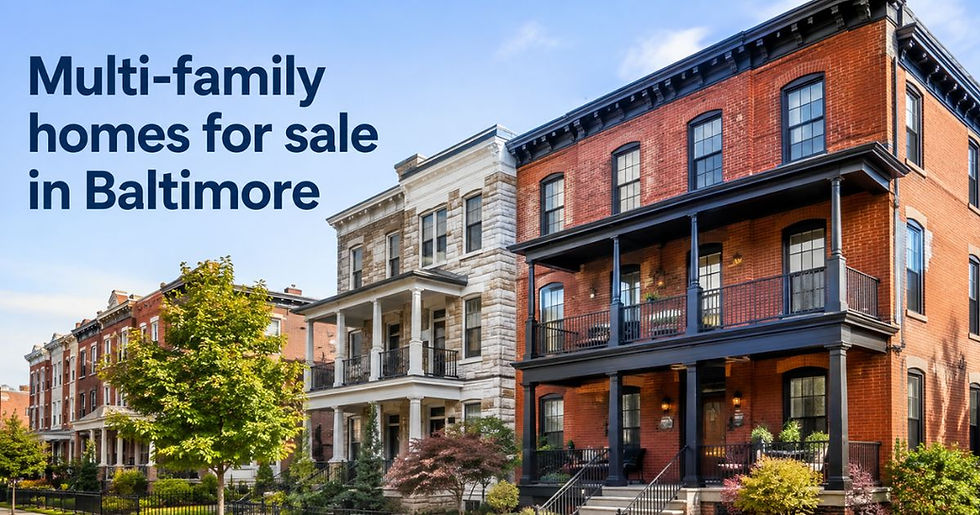
Buying a multi-family property can be one of the smartest ways to build long-term wealth. You can earn rental income from more than one unit while growing your investment over time. Still, every property comes with its own risks and rewards. Before you start exploring multi-family homes for sale in Baltimore, take time to understand the market, review the numbers, and know what makes a property worth buying. A well-planned decision today can lead to stronger returns for years to come.
Why Are Multi-Family Homes a Smart Investment in Baltimore?
Baltimore continues to attract real estate investors because it offers a wide range of investment opportunities. From small duplexes to larger apartment buildings, buyers can find properties that match different budgets and goals.
Unlike a single-family rental, a multi-family property gives you more than one source of rental income. If one unit becomes vacant, the other units may still help cover your monthly expenses.
Investors also choose Baltimore because of:
Steady demand for rental housing.
Different neighborhoods with unique investment opportunities.
Room for long-term property appreciation.
Opportunities to improve older buildings and increase their value.
Still, success depends on choosing the right property instead of simply buying the first building that fits your budget.
Buying the Right Property Starts With Research
Every investment should begin with careful research.
Before making an offer, learn as much as you can about the property and the neighborhood. A lower purchase price may seem attractive, but hidden repair costs or weak rental demand can quickly reduce your returns.
Take time to review:
The property's current condition.
Rental income and occupancy history.
Recent repairs and maintenance records.
Local rental demand.
Future development plans in the area.
For example, two apartment buildings may have similar prices. One may already have reliable tenants and regular maintenance. The other may need major repairs before it can produce steady income. Looking beyond the asking price helps you make a better investment decision.
What Makes a Strong Multi-Family Investment?
A good investment is not always the newest building or the cheapest one. Instead, it should support your financial goals while keeping future costs under control.
Ask yourself questions like these:
Does the rental income cover your monthly expenses?
Does the property have reliable tenants?
Will the location continue to attract renters?
Are there major repairs coming soon?
Can the property's value grow over time?
If you are comparing multi-family homes, avoid making your decision based on appearance alone. A building with stable tenants and lower maintenance costs may offer stronger long-term value than one that simply looks newer.
Location Can Shape Your Investment Success
Location often plays a bigger role than the building itself.
Some Baltimore neighborhoods continue to attract renters because they offer easy access to jobs, universities, hospitals, shopping, restaurants, and public transportation. Areas with ongoing redevelopment may also create new opportunities for investors as property values change over time.
While studying different locations, look for signs such as:
New businesses opening nearby.
Well-maintained streets and neighboring properties.
Easy access to major roads and transit.
Consistent rental demand.
Community improvements that support future growth.
A great property in the wrong location may struggle to perform. On the other hand, a well-located building often keeps attracting tenants year after year.
Should You Buy a Fully Occupied Property or One With Vacancies?
Both choices can work, but each offers different advantages.
A fully occupied building usually provides immediate rental income. You can review current leases, understand existing cash flow, and see how the property has performed over time.
A property with vacant units may create an opportunity to increase income after repairs or updates. However, you should first understand why those units remain empty.
Before moving forward, ask questions like:
How long have the units been vacant?
Why did previous tenants leave?
What repairs or updates are needed?
How do current rents compare with similar properties nearby?
Sometimes vacant units offer room for growth. Other times they point to problems that deserve a closer look.
Property Costs Go Beyond the Purchase Price
Buying the property is only the beginning.
Successful investors prepare for both expected and unexpected expenses. A realistic budget helps you understand whether the investment makes financial sense over the long term.
Besides the purchase price, plan for costs such as:
Property taxes.
Insurance.
Routine maintenance.
Emergency repairs.
Shared utility expenses.
Property management, if needed.
Future improvements that keep the property competitive.
Looking at the complete financial picture helps you avoid surprises after closing.
How Can You Avoid Common Buying Mistakes?
Buying a multi-family property is exciting, but rushing into a deal can become expensive. First-time investors often focus on the purchase price and overlook other details that affect long-term returns.
Here are a few mistakes you should avoid:
Skipping a professional property inspection.
Underestimating repair and maintenance costs.
Ignoring current lease agreements.
Overlooking vacancy rates.
Buying without understanding the local rental market.
For example, a property may look like a bargain because of its low price. However, if several units have been empty for months, you should find out why before making an offer. A little extra research today can help you avoid unexpected costs later.
Local Market Knowledge Gives You an Advantage
Every Baltimore neighborhood offers something different. Rental demand, property values, and future growth can vary from one area to another.
That is why local market knowledge matters. Instead of looking only at today's prices, try to understand where the area may be heading over the next several years.
A local commercial real estate expert can help you evaluate:
Rental demand in different neighborhoods.
Property values and recent sales.
Future redevelopment projects.
Investment opportunities that match your goals.
Factors that may affect long-term returns.
This information helps you make decisions based on facts instead of guesswork. It also gives you more confidence when comparing investment opportunities.
Bottom Line
Buying a multi-family property is more than finding a building with several rental units. The best investments come from careful research, realistic budgeting, and a clear understanding of the local market. As you explore multi-family properties Maryland, focus on properties that support your financial goals and offer long-term value instead of chasing the lowest price.
If you want experienced guidance, Maryland Commercial Ventures is ready to help. With more than 40 years of experience in commercial real estate, multifamily investments, and Baltimore redevelopment, the team understands what makes a property a strong investment. If you are buying your first multifamily property or expanding your portfolio, we provide the local knowledge and practical guidance to help you invest with confidence.


Comments